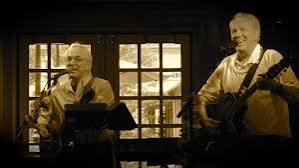
Glenn Close is one of Hollywood’s most celebrated actresses, known for decades of powerful performances and a string of Academy Award nominations. But before any of that, when she was just 22 years old, she was briefly married to a musician named Cabot Wade.
Wade’s name still appears in biographies and relationship timelines connected to Close. Yet very little has been written about him as a person in his own right. This article covers what is publicly known — who he is, how he connected with Close, what their short marriage looked like in context, and what happened afterward.
Who Cabot Wade Is
Cabot Wade is publicly identified as a musician — specifically a guitarist and singer-songwriter. That much is confirmed across several entertainment sources, including coverage from the Los Angeles Times and YourTango.
Beyond that, the confirmed details are thin. No verified birth date, birthplace, or educational background is available from reliable sources. He has not maintained a public presence comparable to Close’s, and his name appears in the media almost entirely in connection with her.
It is worth being clear here: Wade is not an independent public figure in the traditional celebrity sense. He is primarily known because of his marriage to one of Hollywood’s most prominent actresses — and even that chapter of his life lasted only two years.
One small note on identity: some genealogy websites contain records referencing a “Thomas Sebastian Cabot Wade” connected to historical Texas family records. Those records appear to be unrelated to Glenn Close’s former husband. They should not be treated as biographical information about him.
His Marriage to Glenn Close
Wade and Close married in 1969. At the time, Close was 22 years old. The marriage ended in divorce in 1971, making it a relationship that lasted approximately two years.
This timeline is confirmed by established media sources, including the Los Angeles Times, which reported on Close’s relationship history in a 2015 article.
It is important to place this marriage in the right context. In 1969, Glenn Close had not yet appeared in any major film. Her breakthrough role in The World According to Garp did not come until 1982. Films like Fatal Attraction and Dangerous Liaisons were still decades away. She was a young woman at the very beginning of her adult life — not yet the Hollywood figure most people recognize today.
The marriage to Wade predates all of that. It belongs to a quieter, earlier chapter of her life.
The Moral Re-Armament Connection
One detail that helps explain how Wade and Close crossed paths is their shared involvement in Moral Re-Armament, a religious and social movement that was active during that era.
According to Hollywood Life, Wade was associated with a musical troupe connected to Moral Re-Armament. Close also participated in that environment during her early adult years. It was, in part, the setting in which the two of them met and eventually married.
Moral Re-Armament emphasized moral discipline, community living, and a particular kind of group commitment. Understanding that context helps explain why Close later described the relationship in the terms she did — which we will get to in the next section.
This connection is relevant background, but it should not be treated as the complete explanation for why the marriage happened or why it ended. It is simply part of the environment both of them were living in at the time.
How Glenn Close Later Described the Relationship
Because Cabot Wade has not made widely documented public statements about the marriage, Close’s own words are the primary lens through which it gets discussed.
In a 2021 interview with Parade, Close reportedly characterized the marriage as resembling an arranged marriage. That is a notable description — one that suggests the relationship was shaped significantly by the group environment they were both part of, rather than by a conventional courtship.
Older entertainment reports have also attributed more strongly negative comments to Close about the relationship, including descriptions of feeling manipulated. Those accounts come from secondary entertainment sources rather than direct quotes in major publications. They should be read as attributed claims, not as established facts about Wade’s behavior or character.
Close’s retrospective view is understandably colored by hindsight and by how her life unfolded afterward. That is worth keeping in mind when interpreting any of her later comments about this period.
What is clear is that Close did not look back on the marriage fondly. What is less clear — and what the available record does not settle — is the full picture of what the relationship was like from both sides.
What Wade Did After the Marriage
This is the part where the public record essentially goes quiet.
Reliable sources provide little to no verified information about Cabot Wade’s life after the divorce in 1971. There are no widely documented media appearances, public statements, or confirmed career milestones attributed to him in the years that followed.
That absence of information is not unusual for private individuals. Not everyone who appears in a celebrity’s biography goes on to have a public life of their own. Wade appears to be someone who simply lived outside the public eye — which is a reasonable and common choice, not a mystery that demands solving.
Readers should not interpret the lack of information as a sign of controversy, tragedy, or any specific outcome. The honest answer is: we do not know what he has been doing, because he has not made it publicly known.
For more profiles like this one, Minifybusiness covers a range of celebrity background and biography topics worth exploring.
Where Wade Fits in Glenn Close’s Relationship History
Placing Wade in the broader timeline of Close’s life helps readers understand his role without overstating it.
After her divorce from Wade in 1971, Close went on to have several other significant relationships. She married venture capitalist James Marlas in 1984, though that marriage also ended in divorce. She later married producer John Starke in 1984 — and it was during a relationship in the late 1980s that her daughter, Annie Starke, was born in 1988.
Annie Starke is Close’s only child. She was born long after the Wade marriage ended, and Wade is not her father. That point is worth stating clearly, since readers sometimes encounter confusing or incomplete relationship timelines online.
Wade was simply Close’s first husband — a figure from a short, early chapter that closed before her career, and much of her adult life, had really begun.
What We Can Say With Confidence
When the available record is this limited, it helps to separate what is confirmed from what is not.
What is confirmed:
- Cabot Wade is a musician — a guitarist and singer-songwriter.
- He married Glenn Close in 1969, when she was 22.
- The marriage ended in 1971.
- Both Wade and Close were connected to a musical troupe associated with Moral Re-Armament.
- Close later described the relationship as resembling an arranged marriage, in a 2021 interview with Parade.
What is not confirmed:
- Wade’s birth date, birthplace, or educational background.
- His career or personal life after 1971.
- Any public statement made by Wade himself about the marriage.
That gap between what is known and what is not is significant. Any source that fills it with confident-sounding specifics — dates, locations, career details — without solid sourcing should be read carefully.
Final Thoughts
Cabot Wade is a name that surfaces whenever someone researches Glenn Close’s personal history. He was her first husband, a musician connected to a religious movement, and someone who shared a brief and — by Close’s own description — complicated chapter of her early life.
Beyond that, the public record does not offer much. He has not sought attention, made headlines, or contributed to the kind of documented public life that fills a traditional biography.
That is not a failure of research. It simply reflects who he appears to be: a private person who was, for two years in the late 1960s and early 1970s, married to someone who would later become one of the most recognized figures in American film.
His place in the story is real. It is just a small one — and the honest account of it is a short one too.
Read Also: