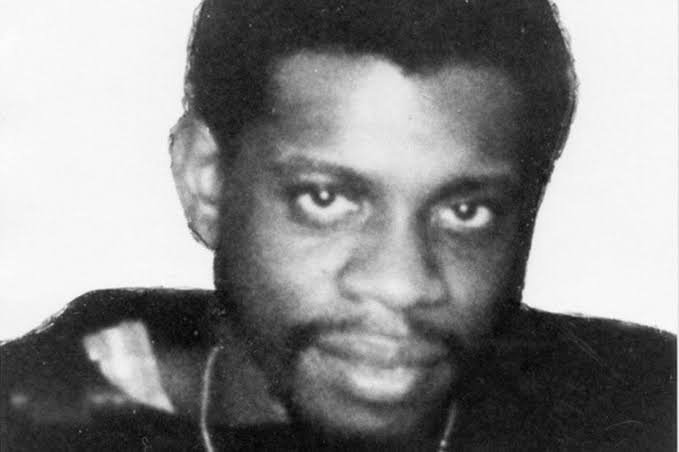
Many people searching for Lumumba Shakur arrive with one question: was he Tupac Shakur’s father? The short answer is no. But once you clear that up, his actual place in the story turns out to be genuinely interesting — rooted in Black Panther history, a politically charged marriage, and one of the most complex family networks in American activist history.
This article covers who Lumumba Shakur was, his marriage to Afeni Shakur, his role in the Harlem Black Panther movement, how he fits into Tupac’s family background, and what the record honestly does and does not tell us about his life.
Who Lumumba Shakur Was
Lumumba Shakur — also identified in some records as Lumumba Abdul Shakur — was a political activist, not an entertainer or public figure in the conventional celebrity sense. His significance is tied to Black liberation politics and his connection to the broader Shakur family network.
Some accounts identify him as a son of Salahdeen Shakur, also spelled Saladin Shakur in certain sources. Salahdeen was a political activist with ties to Malcolm X, and his influence shaped the values carried through the family. Lumumba’s brother was Zayd Shakur, who also moved in Black Panther circles.
It is worth being careful with some of the genealogy records that appear online. Databases like MyHeritage contain entries for Lumumba and various members of the Shakur family, but those records are often user-submitted and should be treated as starting points for research rather than confirmed biographical fact.
His Marriage to Afeni Shakur
The relationship most people want to understand is the one between Lumumba and Afeni Shakur. The two married in 1968. That marriage is the main reason Lumumba’s name appears in discussions of Tupac’s family history.
Afeni Shakur was born Alice Faye Williams. She adopted the name Afeni after becoming involved in Black nationalist politics and the Black Panther Party. By the time she and Lumumba married, both were deeply embedded in the political organizing world of late-1960s New York.
Their marriage placed Lumumba at the center of one of the most politically active households connected to the Shakur name. The marriage did eventually end. After separating from Lumumba, Afeni later married Mutulu Shakur — who is described in biographical sources as Lumumba’s adopted brother. That detail alone shows just how layered this family network was.
Lumumba’s Role in the Black Panther Party
Lumumba and his brother Zayd are described in multiple sources — including the Los Angeles Times, The New Republic, and LitHub — as leaders associated with the Harlem chapter of the Black Panther Party. That is the clearest public record of who Lumumba was outside of his family connections.
His activism was part of the same political world that drew Afeni into organizing. The environment was intense. This was the era of the Panther 21 case, in which Afeni and other activists were charged with conspiracy against the government. Afeni famously represented herself during the trial and was acquitted.
Lumumba’s father, Salahdeen Shakur, had roots in the Malcolm X tradition of Black nationalism. That lineage shaped the political character of the family and helps explain why the Shakur name carried such weight in activist circles. As NPR has noted, the brothers later adopted or used the Shakur surname — reflecting both heritage and political identity.
It is also important to understand that the Shakur surname was not simply a bloodline marker. Several members of the broader network used it as a form of shared political and cultural identity, not purely as a biological family name.
Lumumba Shakur and Tupac — What the Record Actually Shows
Here is the part most readers are looking for. Lumumba was married to Afeni at the time Tupac was born in June 1971. That fact alone sometimes leads people to assume he was Tupac’s father. He was not.
Biographical accounts across multiple reliable sources identify Billy Garland as Tupac’s biological father. Garland was another man Afeni was involved with around the same period. Lumumba’s most accurate description in relation to Tupac is former stepfather — or more precisely, the man who was married to Tupac’s mother at the time of his birth.
As for how close Lumumba and Tupac actually were — there is no well-documented public record that answers that clearly. Some tabloid-style websites make claims about their bond, but stronger biographical sources do not back those claims up with detail. It is better to leave that question open than to fill it with invented narrative.
What is clear is that Tupac grew up steeped in the political world his mother had built through her Panther connections. Whether Lumumba was a meaningful personal presence in Tupac’s upbringing is simply not established in the available record.
The Shakur Family Network — Blood, Marriage, and Political Identity
One reason the Shakur family tree looks so confusing online is that it was never a single, straight bloodline. It was a network — built from biological relationships, marriages, adoptions, and shared political identity.
Here is a simple way to think about it:
- Salahdeen Shakur — political activist, Malcolm X associate, father of Lumumba and Zayd
- Lumumba Shakur — Harlem Black Panther leader, first husband of Afeni
- Zayd Shakur — Lumumba’s brother, also active in Panther organizing
- Afeni Shakur — born Alice Faye Williams, married Lumumba in 1968, later married Mutulu Shakur, mother of Tupac
- Mutulu Shakur — described as Lumumba’s adopted brother, later married Afeni
- Assata Shakur — also connected to Black liberation circles, though her relationship to the others was shaped more by shared political identity than close blood ties
- Tupac Shakur — son of Afeni and Billy Garland, raised within this extended network
Understanding these distinctions helps prevent a common mistake: assuming that everyone named Shakur was a close blood relative. Some were. Others were connected through marriage or adoption. Others shared the name as a marker of political belonging.
Recent books on the Shakur family — reviewed in outlets like The New Yorker and The New Republic around 2023 — have helped bring some of this complexity into clearer public view. If you want to go deeper into the family’s political legacy, those sources are a good starting point.
What Is Known About Lumumba’s Death
This is where the public record gets genuinely murky. Some online accounts claim Lumumba died in New Orleans in 1986. Other sources give different details. The accounts conflict, and none of the major biographical sources reviewed for this article fully resolve the question with strong documentation.
Rather than repeat an unverified claim, it is more honest to say: the circumstances and timing of Lumumba’s death are not clearly established in widely sourced public records. Anyone researching this should be cautious about accepting a specific year or cause without finding corroboration from a reliable publication or archival source.
Why Lumumba Shakur’s Name Still Comes Up
Lumumba Shakur is not famous in the way musicians or actors are famous. He does not have a discography, a filmography, or a Wikipedia page backed by decades of media coverage. His name surfaces because of three overlapping reasons.
First, he was married to Afeni Shakur, one of the most important figures in Tupac’s life. Second, he played a real role in the Harlem Black Panther movement during one of the most politically charged periods in American history. Third, the extended Shakur family has attracted enormous public interest — particularly as books, documentaries, and retrospectives on Tupac continue to appear.
For readers curious about family history, activism, and the world that shaped one of hip-hop’s most iconic figures, Lumumba’s story is a meaningful piece of the picture. Resources like Minifybusiness can help you find and organize information from across the web when you are researching complex topics like this one.
Final Thoughts
Lumumba Shakur was not Tupac Shakur’s biological father. He was Afeni’s first husband, a Black Panther leader in Harlem, and a member of the politically connected Shakur network that shaped Tupac’s upbringing from the outside in.
His story is best understood not through the lens of entertainment celebrity, but through the lens of Black liberation history and the remarkable, complicated family network that carried the Shakur name. The gaps in his public record are real — and it is better to acknowledge them than to fill them with guesswork.
If you are researching the Shakur family, focus on established biographical sources and journalism. They give you the most accurate picture of a family whose history is genuinely worth understanding on its own terms.
Read Also: