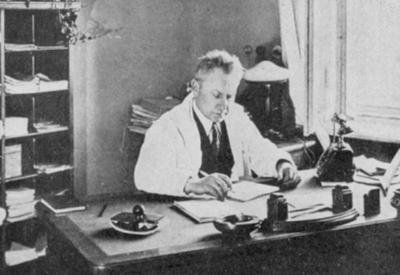
Leone Lattes was a figure whose work significantly advanced the field of forensic science. Born in 1887, he made groundbreaking contributions to forensic serology, the study of bodily fluids in criminal investigations. His innovations, particularly in blood group typing, transformed how forensic scientists utilized blood as crucial evidence in criminal cases. This article will provide insights into his life, career achievements, and enduring impact on forensic science.
Early Life and Education
Leone Lattes was born on February 6, 1887, in Turin. Growing up in a supportive family environment, his parents, Giobbe Lattes and Camilla Lombroso, helped foster his keen interest in medical sciences. Lattes pursued a rigorous education in medicine, eventually studying in Turin. His strong academic foundation laid the groundwork for his later achievements in forensic serology. By understanding his educational journey, one can appreciate the breadth of knowledge he accumulated, which he later applied to forensic challenges.
Key Contributions to Forensic Serology
Lattes is best known for developing the ABO blood group typing method, which was revolutionary in applying forensic science. Prior to his work, analyzing dried blood stains for blood group information was not feasible. In 1915, Lattes introduced a technique to classify blood groups from dried stains, a breakthrough in using blood evidence in solving crimes. This innovation paved the way for modern forensic investigations. His method remains a fundamental practice in the field, enhancing the reliability of blood evidence. Alongside this contribution, Lattes published extensively, with over 300 scientific papers to his name. Notably, his 1932 work, *Individuality of the Blood in Biology and in Clinical and Forensic Medicine,* highlighted his leadership in the study of blood’s role in forensic science.
Professional Life and Achievements
Leone Lattes’ career was marked by numerous milestones that had a lasting influence on forensic science. His innovative methods rapidly gained recognition, encouraging widespread adoption of blood grouping in investigations. By integrating scientific rigor with practical application, Lattes bridged the gap between theory and real-world crime-solving techniques. As forensic science continued to evolve, his contributions served as a foundational platform from which further advances could be built. His career highlights his ability to transform academic knowledge into tangible forensic tools.
Personal Life
Beyond his professional accolades, Leone Lattes was a devoted family man. In 1912, he married Virginia Rabbeno, and together they had three children, including a son named Giorgio Lattes. Balancing his commitment to family with a demanding career, Lattes managed to infuse his personal life with the same dedication that characterized his professional endeavors. This aspect of his life underscores the human dimension of a figure chiefly known for his cerebral contributions.
Later Years and Legacy
In his later years, Lattes continued to influence forensic science until his death in Pavia on November 4, 1954. While no longer with us, his work in forensic serology persists in shaping the field. His methodologies and research have left an indelible mark. The tools he developed for blood analysis are now fundamental to modern forensic techniques, underscoring the importance of his legacy. His work established frameworks and set standards that guide the practice of forensic serology to this day.
Additional Information Options
For those interested in exploring Leone Lattes’ life further, several resources can provide more context, such as short biographies and detailed timelines of his achievements. A family-history profile, primarily based on records like those from MyHeritage, can offer a glimpse into the personal life of this multifaceted individual. These resources provide various perspectives on Lattes’ life, highlighting his contributions to both science and society.
Conclusion
Leone Lattes was a pioneer whose work continues to be integral to forensic science. His life and achievements reflect the dynamic intersection of scientific innovation and practical application. Through his groundbreaking contributions, Lattes advanced forensic serology, enhancing the precision and effectiveness of criminal investigations. As forensic science progresses, the foundation established by his work reminds us of his pivotal role in shaping the field. For more information about advancing forensic practices and methodologies, consider exploring additional resources such as this link. His story stands as a testament to the enduring impact one individual’s dedication can have on an entire field of study.
Read Also: