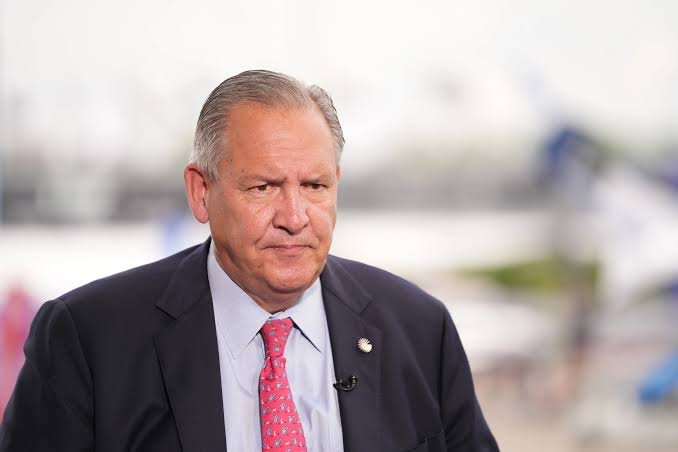
Start by understanding the challenge of identifying individuals with common names. It’s not uncommon to encounter several people named Greg Hayes across various industries. This complication arises because common names can often result in multiple matches, which could lead to confusion. Here’s why this matters: distinguishing between individuals with the same name is crucial, especially in business and professional environments. Ambiguity can affect communication, data compilation, and decision-making processes.
Depending on your situation, individuals need to use specific distinguishing details to accurately differentiate between such common names. Consider consulting a professional if accuracy is crucial, as having incorrect information can lead to unwanted outcomes. The process involves careful scrutiny of identifying details, which can vary widely, depending on available information. In the case of Greg Hayes, there is an interesting twist in the form of “Greg Hayes Mujib.” This variant might be a full name, an error, or even a less common individual not as widely represented.
Criteria for Focused Research
The next step is to outline the criteria for conducting focused research. Here’s how to approach it: define the objective of your search, outline the requirements, and set specific guidelines for the information you need. To precisely identify a particular Greg Hayes, one must gather pertinent details that narrow down the options. Essential details could include career specifics, geographic location, professional online profiles, birth year, or family associations.
Here’s why these criteria matter: they transform an ambiguous search into a targeted inquiry. Identifiers such as a company name or a professional role provide clarity. For example, if you’re looking for Greg Hayes from a city or industry-specific event, this geographical detail can sharply narrow your scope. Similarly, an online profile offers an avenue for verification and deeper insight. An organized approach reduces uncertainty and enables you to arrive at a precise identification with greater efficiency.
Case Study: Gregory Hayes of United Technologies
Let’s explore an example: Gregory Hayes, associated with United Technologies (now RTX). Here’s why this Gregory Hayes stands out—a notable figure in aerospace and defense, he has been a key player within these sectors. Gregory Hayes became CEO of United Technologies in 2014, marking a significant milestone in his career. This appointment was followed by his election to chairman in 2016. Such major milestones provide strong identifiers, distinguishing him from any other Greg Hayes.
The process involves verifying details such as educational background and career trajectory. Gregory Hayes’s education at Purdue University in economics and key roles in the aerospace industry anchor his identity. Recent career developments, like the transition in leadership at RTX, further refine this specific identification. His decision to step down as CEO in 2024 demarcates a new phase. These career achievements and predictable transitions serve as clear identifying elements.
Requesting Specific Information for Other Searches
When conducting similar research, encouraging individuals to provide unique information is key for targeted searches. Start by asking for additional specifics, such as unique details that can lead to a successful identification. Here’s why this matters: even small additional data can make a difference. For instance, specifying a birth year or mentioning a lesser-known project involvement might isolate the right individual.
To take the right approach, be clear about what you seek. If you need to find another Greg Hayes, like Greg Hayes Mujib, clarity on purpose and parameters helps. Consider sharing what details you have, whether personal connections, LinkedIn profiles, or specific anecdotal data. This makes your search efficient and effective, reducing ambiguity in results. The goal? To reach an accurate and informed conclusion, based on the provided details.
Conclusion
As we recap, the precision in personal identification, especially with common names like Greg Hayes, is of paramount importance. Start by being vigilant and methodical in your approach, ensuring to collect and verify the necessary pieces of information. Maintaining accuracy not only aids in clear communication but also enhances data reliability for decision-making.
Consider consulting a professional if further clarification is needed. As you navigate the complexities of distinguishing among multiple individuals with common names, remember that providing specific data points streamlines the research process. Efficient information gathering leads to improved clarity and results—an essential component in maintaining compliance and accuracy.
For more resources on managing business challenges, you may explore detailed guides and strategies at Minify Business.
Read Also: